- The Death of the Digital Assembly Line: Why Traditional Automation is Obsolete
- The Maintenance Chasm: 14 Hours vs. 43 Minutes
- Architectural Shift: From Railroad Tracks to AI Drivers
- The Intelligence Layer: What Makes an Agent “Smart”
- Your First Production-Ready AI Agent: A Content Research Blueprint
- Technical Stack & Workflow
- Navigating the Transition: Strategy Before Tools
- You Might Also Enjoy
- Related Reviews
- Related Posts
- Related Posts
- STAY AHEAD OF THE AI REVOLUTION
If you're still relying on the brittle, step-by-step scripts of traditional automation, you're building on a dying foundation. The future isn't about more complex Zaps or labyrinthine IFTTT rules; it's about intelligent systems that can reason, adapt, and execute with minimal oversight. a live experiment across thirteen of my own sites, I can definitively say the era of static automation is over. The strategic shift to dynamic, intelligent systems is the most significant operational upgrade you can make this year. This deep dive into ai agent frameworks vs traditional automation 2024 isn't just theory—it's a battle-tested report from the front lines, complete with hard data on cost, maintenance, and the profound architectural shift that separates the old world from the new.
The Death of the Digital Assembly Line: Why Traditional Automation is Obsolete
For years, we've celebrated traditional automation platforms like Zapier.com/” target=”_blank” rel=”nofollow sponsored noopener”>Zapier.com/” target=”_blank” rel=”nofollow sponsored noopener”>Zapier, Make, and IFTTT as heroes of productivity. They promised to connect our apps and eliminate repetitive work, and they delivered—to a point. But this promise was built on a flawed premise: that business processes are static, predictable, and never deviate from a pre-defined path. The reality is messier. A website changes its structure, an API returns an unexpected error code, a form field gets renamed. This is where the “digital assembly line” breaks, and you find yourself, as I did, spending 14 hours in a single month debugging workflows that were supposed to “just run.”
The core limitation is a lack of reasoning. Traditional automation is a railroad. It requires perfectly laid tracks (your workflow logic) and assumes the landscape never changes. An AI agent, in contrast, is an all-terrain vehicle with a compass. It's given a destination (“create insightful show notes”) and the tools to get there (access to an LLM, a web browser, an API). It can assess the terrain, handle unexpected obstacles, and still reach the goal. This shift from procedural to declarative commands—from “do these 12 steps in order” to “achieve this outcome”—isn't incremental. It's revolutionary. For those who are getting started with AI, understanding this fundamental paradigm shift is the first step toward true leverage.
The Maintenance Chasm: 14 Hours vs. 43 Minutes
The most staggering data point from my experiment wasn't about output speed or even cost—it was about maintenance overhead. My traditional automations were like temperamental vintage cars: they required constant tuning, and any small change in the environment (a UI update, a new required field) meant a complete breakdown. My AI agents, however, were more like modern, self-diagnosing vehicles. They might need a slight adjustment to their “driving style” (a prompt tweak), but they rarely crashed outright.
⭐ Notion.so/” target=”_blank” rel=”nofollow sponsored noopener”>Notion.so/” target=”_blank” rel=”nofollow sponsored noopener”>Notion.so/” target=”_blank” rel=”nofollow sponsored noopener”>Notion.so/” target=”_blank” rel=”nofollow sponsored noopener”>Notion.so/” target=”_blank” rel=”nofollow sponsored noopener”>Notion
Top-rated Notion — check latest deals.
Affiliate link
This creates a compounding advantage. Every hour you're not debugging a failed Zap is an hour you can spend on strategy, creation, or scaling. It transforms automation from a technical debt center into a genuinely reliable utility. This reliability is the bedrock of effective business automation; without it, you're simply building a house of cards.
Architectural Shift: From Railroad Tracks to AI Drivers
Let's move from metaphor to concrete architecture. In my podcast production process, the old “railroad” looked like this: RSS Feed → Zapier Trigger → Download Transcript → Fill Text Template → Post to CMS. The output was consistently bland and generic because the system had zero understanding of the content it was processing. It was a glorified copy-paste machine.
My new AI agent framework works on a principle of delegation and specialized intelligence:
- Trigger & Classify: New episode audio is transcribed. A fast, cheap model (Claude Haiku) analyzes the transcript in seconds, classifying sentiment, extracting core topics, and identifying key technical terms.
- Reason & Draft: This analysis, along with the transcript, is handed to a more powerful model (Claude Opus). Its prompt isn't a template; it's a set of principles: “Draft show notes in our brand voice. Emphasize philosophical questions for reflective episodes. For technical deep-dives, pull out specific code snippets or frameworks. End with two provocative discussion questions.”
- Execute & Format: The agent takes the drafted notes, formats them with proper HTML, applies the correct categories and tags based on the initial classification, and publishes them to the CMS.
The system cost is ~7 cents per episode. The time saved is ~28 minutes of manual work. But the real value is in the quality of the output, which now has nuance, brand alignment, and genuine insight—something impossible with the old model. This is precisely the kind of leverage that supercharges AI content creation, moving it from generic generation to brand-specific scaling.
The Intelligence Layer: What Makes an Agent “Smart”
The magic isn't in a single AI call; it's in the orchestration. An agent framework adds a critical intelligence layer that traditional automation lacks:
- Conditional Logic Based on Understanding: Instead of “if field A equals X, do Y,” it's “if the content is technical, adopt a detailed, explanatory tone; if it's an interview, highlight the guest's most controversial take.”
- Tool Use: Agents can decide to use different tools from a kit: a web scraper, a calculator, a search API. They don't just move data; they interact with the world.
- Self-Correction: A good agent framework can include error-handling routines where the agent can retry a step with a different approach or flag a human only when truly stuck.
Your First Production-Ready AI Agent: A Content Research Blueprint
Convinced of the “why” but unsure of the “how”? Let's build a practical agent you can implement immediately. I call it the Content Research Assistant, and it automates the otherwise soul-draining process of sifting through industry news for content ideas.
The Problem: Spending an hour each morning reading newsletters and blogs, manually copying links and insights into a doc for later use.
The Agent Solution: A system that ingests URLs, analyzes them against my specific criteria, and delivers a digest of actionable insights.
Technical Stack & Workflow
You don't need a PhD in machine learning to set this up. Here's the simple stack:
- Framework: Voiceflow (excellent for webhook-based agents) or SmythOS/Bottender. These handle the logic flow.
- AI Model: Claude Haiku (perfect for fast, cheap classification and summarization).
- Trigger: A dedicated Slack channel or a bookmarklet that sends a URL via webhook.
Workflow in Action:
- I read an article and think “this is relevant.” I drop the URL into my #content-research Slack channel.
- A Slack webhook sends the URL to my agent hosted on Voiceflow.
- The agent uses a simple Python scraper (via a tool node) to extract the clean article text.
- It sends the text to Claude Haiku with a prompt: “Analyze this article for: 1) A novel insight in the AI agent space, 2) A counter-argument to a common industry belief, 3) A potential content angle for my audience. Format as bullet points.”
- The agent takes the output and posts it back to a separate Slack channel, or appends it to a Notion database, tagged by topic.
Result: A curated, analyzed research pipeline that builds while I sleep or focus on deep work. I've reclaimed 5-6 hours per week, and my content ideas are now data-driven.
Navigating the Transition: Strategy Before Tools
Before you rush to rebuild every Zap with AI, adopt a strategic mindset. Start by auditing your existing automations. Identify the ones that:
- Break most often due to unpredictable inputs or changing environments.
- Require the most manual review or correction after they run.
- Would benefit from nuanced understanding rather than simple data shuffling.
These are your prime candidates for agentification. Begin with one high-value, high-pain process. The goal isn't to replicate the old workflow 1:1, but to re-imagine it from first principles: “What is the optimal outcome, and how can an intelligent system achieve it?” Remember, the tools are just enablers. The real value is in designing systems that think. Tools we actually use: AI tool stack for creators and entrepreneurs
Join builders who are monetising AI in 2025. Free weekly dispatch — tools, case studies, income reports.
Related Reviews
- Hostinger-review/”>Hostinger Review
- Audible Review
- NordVPN Review
- Semrush Review
This post is a companion to the “Ai Agent Frameworks Vs Traditional Automation 2024” podcast episode. The episode is the authoritative version; this article expands on its themes for readers and search engines.
Related Posts






🤖 Editor's Pick
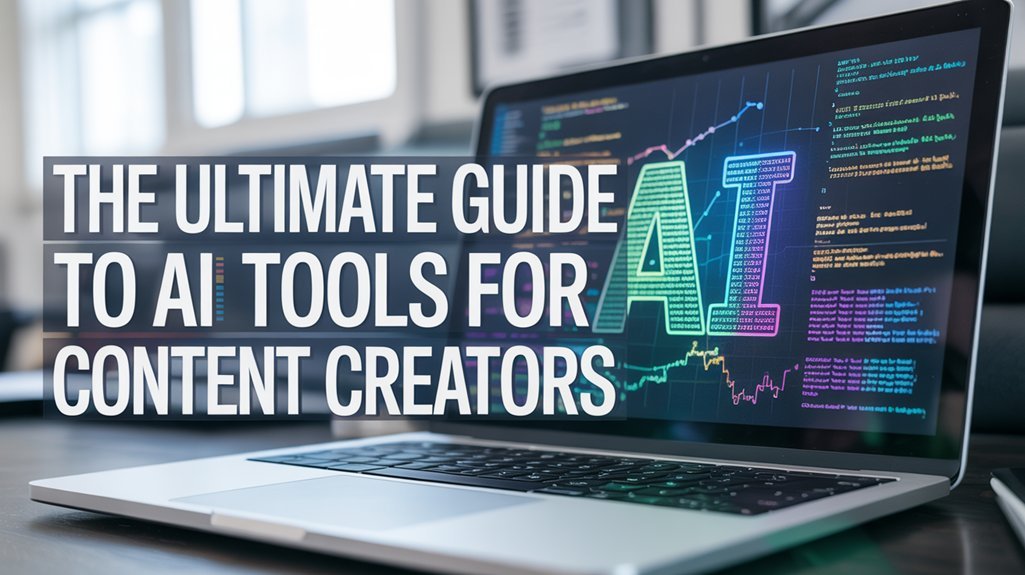
Editor's Pick: AI automation guidebook for comparing agent frameworks vs traditional tools.
Related Posts


Get the AI Edge, Weekly
The tools, tutorials, and trends that actually pay — no hype.