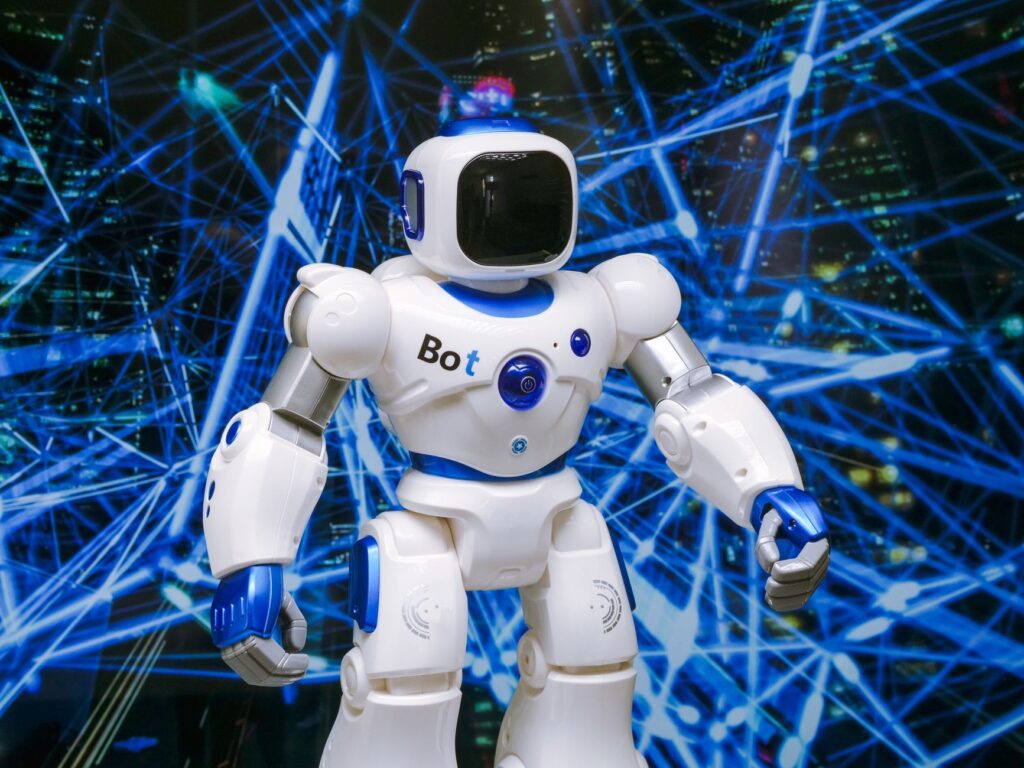
Understanding AI Trading Bots: Frameworks and Models
As AI continues to transform the financial sector, trading bots have become increasingly sophisticated, leveraging advanced machine learning models to analyze market data and make informed trading decisions. When evaluating AI trading bots, it's essential to understand the underlying framework and model used to develop these platforms. Many AI trading bots rely on popular frameworks such as PyTorch, TensorFlow, or Keras, which provide a solid foundation for building and training machine learning models.
Some AI trading bots utilize transformer-based architectures, which have shown remarkable success in natural language processing tasks. For instance, the Hugging Face Transformers library provides a wide range of pre-trained models that can be fine-tuned for specific use cases, including sentiment analysis and text classification. Similarly, OpenAI's language models, such as BERT and RoBERTa, have been used to analyze market sentiment and predict stock prices.
Benchmarking AI Trading Bots: Datasets and Performance Metrics
When reviewing AI trading bots, it's crucial to evaluate their performance using benchmark datasets and metrics. A popular dataset for evaluating trading bots is the Yahoo Finance dataset, which provides historical stock prices and other market data. AI trading bots can be trained and evaluated on this dataset using metrics such as mean absolute error (MAE), mean squared error (MSE), and return on investment (ROI).
To deploy AI trading bots, developers often use APIs and SDKs provided by platforms like LangChain or Hugging Face. These APIs enable seamless integration with various data sources and allow for efficient inference and deployment of machine learning models. For instance, LangChain's API provides a simple and intuitive way to deploy LLM-based trading bots, while Hugging Face's Transformers library offers a wide range of pre-trained models that can be used for inference.
Practical Considerations: Integration, Latency, and Throughput
When integrating AI trading bots into existing workflows, several practical considerations come into play. One key aspect is the integration with various data sources, such as APIs, data feeds, or databases. AI trading bots must be able to handle large volumes of data and make rapid decisions in real-time. To achieve this, developers often use techniques such as tokenization, embedding, and workflow optimization.
Another critical consideration is latency and throughput. AI trading bots must be able to process and respond to market data in a timely manner to maximize returns. To minimize latency, developers can use techniques such as model pruning, knowledge distillation, or quantization. Additionally, AI trading bots can be optimized for high-throughput processing using distributed computing frameworks like PyTorch's DataLoader or TensorFlow's tf.data.
Frequently Asked Questions
Q: What is the best AI trading bot platform?
A: The best AI trading bot platform depends on specific use cases and requirements. Popular platforms include LangChain, Hugging Face, and OpenAI, each offering unique features and capabilities.
Q: How do AI trading bots handle market volatility?
A: AI trading bots can handle market volatility by using techniques such as risk management, position sizing, and stop-loss orders. Additionally, some AI trading bots use reinforcement learning or other advanced machine learning techniques to adapt to changing market conditions.
Q: Can AI trading bots be used for cryptocurrency trading?
A: Yes, AI trading bots can be used for cryptocurrency trading. Many AI trading bot platforms support cryptocurrency exchanges and provide pre-built models and APIs for integrating with these exchanges.
Related Posts


Related Posts


Related Posts

🤖 Editor's Pick
Editor's Pick: AI productivity books to sharpen your bot analysis and trading strategy skills.
Get the AI Edge, Weekly
The tools, tutorials, and trends that actually pay — no hype.