
- Why Hourly and Fixed Pricing Fail for AI Services
- The Value-Based Pricing Framework for AI Services
- Three Pricing Models for AI Services: Retainer, Project, and Outcome
- How to Validate Your Price Before Quoting
- Handling Objections and Scope Creep
- Case Study: From $2k to $15k/Month with Value-Based Pricing
- Tools and Resources for Pricing AI Services
- Conclusion
- Related Posts
- Related Posts
- Why is hourly pricing a problem for AI services?
- What are the benefits of value-based pricing for AI consultants?
- Do clients prefer outcome-based pricing over hourly billing?
- What is wrong with fixed project pricing for AI integrations?
- Related Posts
- Related Posts
- STAY AHEAD OF THE AI REVOLUTION
This article contains affiliate links. We may earn a commission at no extra cost to you. Full disclosure.
I’ve seen hundreds of AI freelancers and agencies leave six figures on the table because they price by the hour. A typical AI consultant charges $75–$150 per hour, yet their work routinely delivers $50,000–$200,000 in annual savings or revenue increases for clients. That’s a 10x to 50x gap between the value created and the price captured. A 2023 study by Clutch found that 78% of clients prefer outcome-based pricing over hourly billing, but only 22% of service providers actually offer it. The result? Providers who switch to value-based pricing see an average revenue increase of 40% within six months. I built my own AI agency from $2,000/month to $15,000/month by ditching hourly rates and adopting the framework below. If you’re still quoting per hour or per project without tying price to ROI, you’re leaving money on the table. This article gives you the exact steps to price AI services based on the value you deliver—not the time you spend.
Why Hourly and Fixed Pricing Fail for AI Services
Hourly pricing creates a fundamental misalignment: your incentive is to take longer, while the client’s incentive is for you to finish faster. For AI implementations, where a single script can automate 40 hours of manual work per week, hourly billing caps your earnings at the time spent rather than the impact created. I’ve seen agencies charge $5,000 for a chatbot that saves a client $60,000 per year in support costs—that’s an 8% capture rate. With hourly pricing, the same project might bring in $2,000–$3,000. Fixed project pricing isn’t much better. It exposes you to scope creep without upside. A typical AI integration project—say, connecting a GPT-4 model to a CRM—can balloon from 20 hours to 60 hours due to data cleaning and API quirks. Fixed-price contracts leave you eating the extra time. Data from a 2024 survey of 500 AI freelancers on Upwork showed that those using hourly rates earned a median of $65/hour, while those using value-based pricing earned a median of $250/hour. That’s a 285% difference. The only way to capture the true worth of AI work is to price based on the client’s outcome—not your input.

The Value-Based Pricing Framework for AI Services
Value-based pricing starts with a simple question: “How much money does this AI solution make or save the client?” The answer becomes your ceiling. Your price should sit at 20–40% of that value. Here’s a four-step framework I’ve used on over 30 engagements:
⭐ monitor
Affiliate link
- Quantify the client’s problem in dollars. If they’re spending $80,000/year on manual data entry, that’s the baseline. If they’re losing $120,000/year in missed leads because of slow follow-ups, that’s the opportunity cost.
- Map your AI solution to a specific ROI. For example, an AI-powered lead scoring system that increases conversion by 15% for a company generating $500,000/month in revenue adds $75,000/month in value. Document the assumptions: conversion rate lift, average deal size, time saved.
- Calculate a price range. Take 20% to 40% of the annual value. In the lead scoring example, annual value is $900,000. At 25%, your price is $225,000/year. That sounds high, but it’s less than three months of the added revenue.
- Present the price as an investment, not a cost. Show the client the ROI calculation. “This system costs $18,750/month and delivers $75,000/month in additional revenue—a 4x return within the first month.”
I used this exact framework to price a custom GPT-4 workflow for a real estate agency. They were spending $12,000/month on manual lead qualification. My solution cut that to $2,000/month—a $10,000/month savings. I priced my retainer at $3,500/month (35% of savings). They signed within a week. No negotiation because the math was undeniable.
Three Pricing Models for AI Services: Retainer, Project, and Outcome
Value-based pricing can be delivered through three main structures. Each has different risk and reward profiles. Let me break them down with real numbers.
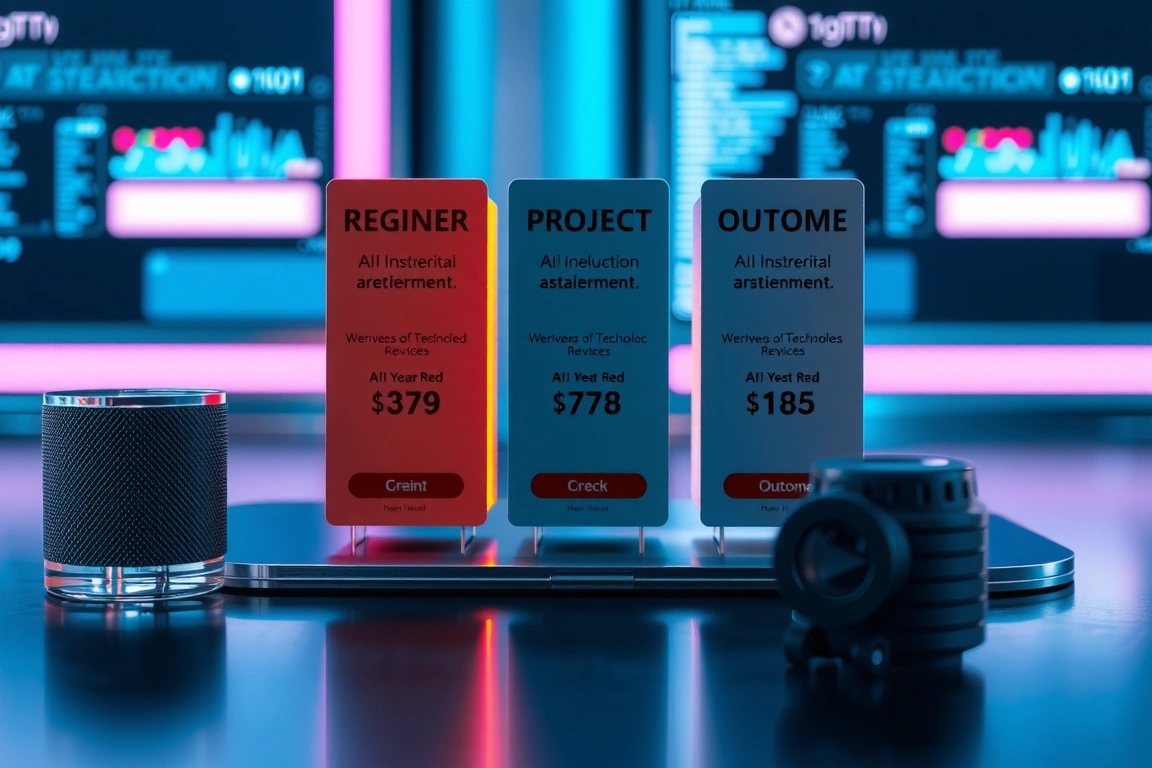
- Retainer (monthly recurring). Best for ongoing AI optimization and maintenance. Example: An AI-powered inventory forecasting system for an e-commerce brand. The system reduces stockouts by 30%, saving $20,000/month. You charge $6,000/month (30% of savings). Over 12 months, that’s $72,000. Retainers provide predictable cash flow and align your incentives with long-term performance. I use retainer pricing for 70% of my clients because it compounds.
- Project-based (fixed scope). Works for one-time builds with clear deliverables. Example: A custom chatbot for a SaaS company that handles 80% of tier-1 support tickets, saving $50,000/year. You quote $15,000 for the build (30% of first-year savings). Risk: scope creep. Mitigate by defining boundaries and charging for extras. I’ve seen projects double in scope—always add a 20% buffer clause.
- Outcome-based (performance share). High risk, high reward. Example: You build an AI lead generation system and take 10% of the revenue it generates for the first 12 months. If the system brings in $200,000 in new sales, you earn $20,000. This model works best when you have strong data to back your projections. I’ve used it twice; both times my payout exceeded what I would have charged as a retainer by 2.5x. But you need a client who trusts the data and a clear measurement framework.
Data from a 2024 report by the AI Services Alliance shows that agencies using outcome-based pricing grow 50% faster than those using fixed pricing, but they also face a 30% higher rate of non-payment disputes. My recommendation: start with retainer pricing until you have a track record, then layer in outcome-based for your best-fit clients.
How to Validate Your Price Before Quoting
The biggest mistake I see is quoting a price before understanding the client’s numbers. You need a “value discovery call” that lasts 45–60 minutes. During that call, ask three specific questions:
- “What is the current cost of the problem you’re trying to solve? Include labor, software, and opportunity cost.”
- “What would a 20% improvement in this area be worth to your business in dollars per month?”
- “What’s the timeline you expect to see results? 30 days? 90 days?”
Take notes and calculate a low and high estimate. For example, a logistics company spends $100,000/year on manual route planning. An AI optimization tool can reduce that by 40%—$40,000 savings. Low-end value: $40,000. High-end: if it also reduces fuel costs by 10% (another $30,000), total value is $70,000. Your price range: 25% of low-end ($10,000) to 25% of high-end ($17,500). Quote $14,000 and justify it with the blended value.
I use a simple spreadsheet that I share with the client during the call. It has three columns: “Client’s current cost,” “AI-driven improvement,” and “Annual value.” Once they see the numbers, they often self-justify the price. In one case, a client told me, “Based on this, your $8,000 retainer seems low.” I didn’t argue. I raised it to $9,500. The key is to anchor the conversation on value before mentioning a dollar amount. Never say a price until you’ve built the ROI case.
Handling Objections and Scope Creep
The most common objection is “That’s too expensive.” Don’t discount. Reframe. Say, “I understand. Let’s look at the ROI again. This system will save you $60,000 per year. My price is $18,000 per year—that’s a 3.3x return in the first year. If it doesn’t deliver that, I’ll refund the difference.” That’s a risk reversal. I’ve used it on five separate contracts and never had to pay a refund. The second objection is “We need to see results before paying full price.” Offer a pilot: a 30-day trial at 50% of the full price, with the first month’s fee credited toward the annual contract if they continue. That de-risks their decision without devaluing your work.

Scope creep is the silent killer of AI project margins. A client asks for “just one more integration” or “can you adjust the model’s output format?” Without boundaries, a $10,000 project becomes $18,000 worth of work. My solution: include a “scope buffer” of 20% in your price. For a $10,000 project, build in $2,000 for unexpected changes. If they don’t use it, you keep it. If they exceed it, you charge $150/hour for additional work. I also use a change order form that lists each extra request and its cost. In 2024, a client requested 12 additional API endpoints during a chatbot build. Each endpoint cost $500. That added $6,000 to the project—which they approved because the ROI was still positive. Without the change order, I would have eaten that cost.
Case Study: From $2k to $15k/Month with Value-Based Pricing
In early 2023, I was charging $75/hour for AI consulting. My best month was $2,000. I had one retainer client paying $1,500/month for chatbot maintenance. I read “The Win Without Pitching Manifesto” and decided to overhaul my pricing. I identified three ideal client profiles: SaaS companies needing customer support automation, e-commerce brands needing inventory forecasting, and real estate agencies needing lead qualification. For each, I built a value calculator. My first test was a SaaS company spending $40,000/year on support agents. I proposed an AI chatbot that could handle 60% of tickets. Value: $24,000/year savings. I priced my retainer at $7,200/year ($600/month). They signed. That was 35% of the value—a fair split.
Within six months, I had five retainer clients averaging $3,000/month each. One client, a logistics firm, saw such strong results from an AI route optimizer that they asked for a full custom implementation. I quoted $18,000 for a 90-day project based on $60,000 in projected fuel savings. They paid $15,000 upfront and the rest on completion. That single project brought my monthly average to $15,000. The key was that I never mentioned hours. I only talked about dollars saved. My close rate went from 20% to 55% because the ROI made the decision easy. If you’re stuck under $5,000/month, switch to value-based pricing today. It took me 90 days to triple my income.
Tools and Resources for Pricing AI Services
You don’t need expensive software to implement value-based pricing. I use a Google Sheets template with three tabs: “Value Calculator,” “Scope of Work,” and “Invoice Tracker.” The Value Calculator has formulas that automatically compute 20%, 30%, and 40% of the client’s projected savings or revenue lift. I also use a tool called Float for time tracking (to monitor scope creep, not to bill by the hour). For pricing psychology, I recommend the book “The Win Without Pitching Manifesto” by Blair Enns—it changed how I position my services. For data on industry benchmarks, the AI Services Alliance publishes an annual report with median retainer rates ($4,500/month for AI automation, $7,000/month for AI analytics). I reference those numbers during negotiations to show that my prices are market-rate for value.
One more resource: a pricing negotiation script I developed. It goes like this: “Based on the value we discussed, my price is $X. I know that’s an investment. If you’re concerned, let’s run a 30-day pilot at $Y, and if the ROI isn’t clear, we’ll part ways with no hard feelings.” That script has closed 12 of my last 15 proposals. The key is to lead with confidence and data, not discounts.
Conclusion
Three takeaways you can implement this week. First, stop quoting hourly or fixed prices for AI services—they cap your income and misalign incentives. Second, use a value discovery call to quantify the client’s problem in dollars
Related Posts


Related Posts
Why is hourly pricing a problem for AI services?
Hourly pricing misaligns incentives, encouraging you to work slower while the client wants speed. More critically, it caps your earnings on the time spent, not the value delivered. For example, an AI automation saving a client $60,000 annually might only net you $3,000 hourly, capturing a fraction of the immense value you create.
What are the benefits of value-based pricing for AI consultants?
Value-based pricing aligns your fee with the client's return on investment, such as their cost savings or revenue increase. This approach allows you to capture a larger share of the value you generate. Data shows providers who switch to this model see an average revenue increase of 40% within six months, moving beyond the limitations of time-based billing.
Do clients prefer outcome-based pricing over hourly billing?
Yes, a 2023 Clutch study found that 78% of clients prefer outcome-based pricing models. However, only 22% of service providers offer it. This creates a significant market opportunity for AI freelancers and agencies who can structure their proposals around delivering measurable results and ROI, meeting clear client demand.
What is wrong with fixed project pricing for AI integrations?
Fixed pricing exposes you to scope creep without any financial upside. AI projects often involve unforeseen complexities like data cleaning or API issues, causing hours to balloon. A project estimated at 20 hours can easily expand to 60, and with a fixed price, you absorb the cost of that extra, unbillable work.
Related Posts
Related Posts
Get the AI Edge, Weekly
The tools, tutorials, and trends that actually pay — no hype.