
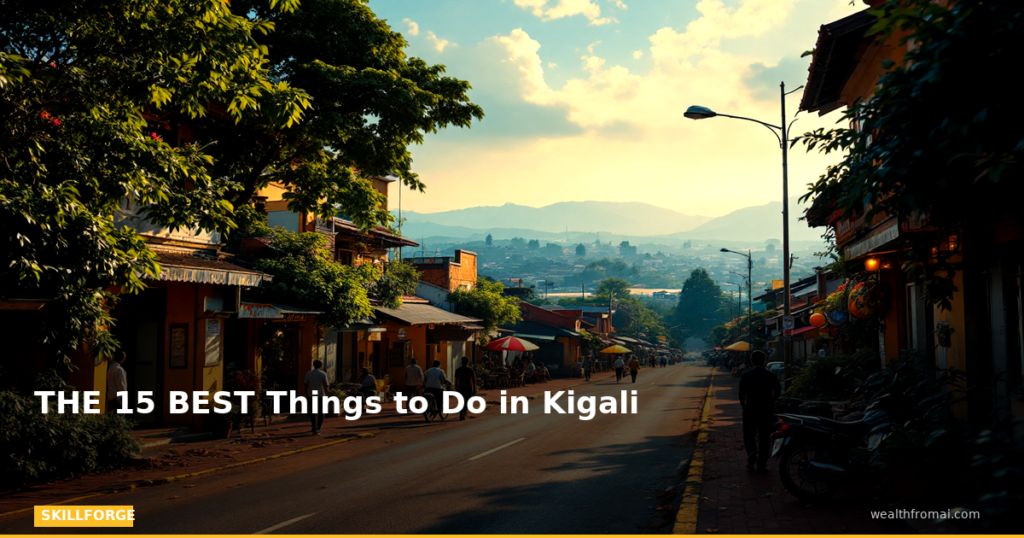
# The Ultimate Guide to Kigali in 2026: 15 Must-Do Experiences for First-Time Visitors
**Discover why Rwanda's sparkling capital is Africa's most surprising city—and how to experience it like a local.**
I'll never forget the moment my taxi pulled into Kigali for the first time. I was expecting chaos—honking horns, clogged streets, the usual urban frenzy I'd experienced in other African capitals. Instead, I found immaculate boulevards lined with flowering jacaranda trees, a city so clean it felt almost surreal. A police officer smiled and waved at me. A woman carrying a basket of mangoes on her head stopped to pick up a stray piece of paper and placed it in a bin.
“Welcome to Kigali,” my driver said, and I realized I was already falling in love.
By 2026, this love affair has only deepened. Kigali has transformed from a quiet upstart into one of Africa's most dynamic destinations—a city where high-tech innovation meets deep cultural roots, where world-class coffee shops sit alongside bustling artisan markets, and where a painful past has been transformed into a powerful lesson in reconciliation and hope.
But here's the thing: Kigali rewards those who prepare. With 48,575 traveler reviews shaping the insider knowledge I'm about to share, I've distilled everything you need to know into one comprehensive guide. Whether you have one day or three, this skill will help you navigate the city's 15 best attractions with confidence, cultural awareness, and a sense of adventure.
Let's dive in.
—
## Section 1: Getting Your Bearings – Kigali in 2026
Before we explore the 15 best things to do, let's set the stage. Kigali in 2026 is a city of hills—literally. The “Land of a Thousand Hills” nickname applies perfectly to its capital, where neighborhoods cascade down verdant slopes and every viewpoint offers a breathtaking panorama.
### When to Visit
The best times to visit are the dry seasons: **June to September** and **December to February**. During these months, you'll enjoy clear skies, comfortable temperatures (70-80°F / 21-27°C), and minimal rain. However, even during the wet seasons (March-May and October-November), afternoon showers typically pass quickly, and the city's green landscapes become even more vibrant.
**Insider tip:** Book your Kigali Genocide Memorial visit for a weekday morning to avoid crowds. By 10 AM, tour groups arrive, and the reflective atmosphere becomes harder to find.
### Getting Around
Kigali is surprisingly walkable for a hilly city—if you're fit and don't mind inclines. But for most travelers, these are your best options:
– **Moto-taxis (motorcycles):** The fastest way to navigate traffic. Always negotiate the fare before getting on (typically 500-2000 RWF per trip). **Safety note:** Always wear the helmet provided and check that the driver has a valid license.
– **Special hire taxis:** More expensive but comfortable. Download the **YEGO** app for reliable, metered rides.
– **Public buses:** Cheap but confusing for first-timers. Stick to motos or taxis for your first few days.
– **Walking tours:** Several companies offer guided walks through neighborhoods like Nyamirambo and Kacyiru—highly recommended for orientation.
### Essential Planning Advice
– **Visa:** Most nationalities get a 30-day visa on arrival ($50 USD). Check Rwanda's e-visa portal before traveling.
– **Currency:** Rwandan Franc (RWF). ATMs are widely available, but carry cash for markets and small vendors.
– **Language:** Kinyarwanda, French, and English. Most tourism workers speak English.
– **Safety:** Kigali is one of Africa's safest cities. Violent crime is rare, but practice standard urban precautions—keep valuables hidden, avoid walking alone at night in quiet areas.
– **Dress code:** Modest clothing is appreciated. Women should avoid short shorts or revealing tops when visiting religious sites or the Genocide Memorial.
—
## Section 2: The 15 Best Things to Do in Kigali (2026 Edition)
Now, the moment you've been waiting for. These 15 experiences represent the absolute best of Kigali—curated from traveler reviews, local recommendations, and my own explorations. Each includes practical details to make your visit seamless.
### 1. Kigali Genocide Memorial
**Why it's essential:** This is not a tourist attraction—it's a sacred space that every visitor to Rwanda must experience. The memorial tells the story of the 1994 Genocide against the Tutsi with heartbreaking clarity, honoring the 250,000 victims buried here. You'll leave with a profound understanding of Rwanda's past and its remarkable journey toward reconciliation.
**Practical details:** Open daily 8 AM-5 PM (last entry 4 PM). Free admission (donations encouraged). Allow 2-3 hours. Guided tours available in English, French, and Kinyarwanda. **Insider tip:** Visit first thing in the morning to have the space almost to yourself. The audio guide is excellent—don't skip it.
### 2. Inema Arts Centre
**Why it's essential:** Kigali's creative soul lives here. This vibrant gallery showcases contemporary Rwandan artists working in painting, sculpture, and mixed media. The rotating exhibitions ensure every visit feels fresh, and you can purchase original pieces directly from the artists.
**Practical details:** Open Mon-Sat 9 AM-6 PM. Free entry. Located in Kacyiru. **Insider tip:** Visit on the last Saturday of the month for the “Art Night” event with live music, drinks, and artist talks.
### 3. Kimironko Market
**Why it's essential:** For an authentic slice of Kigali life, nothing beats Kimironko. This sprawling market is where locals buy everything from fresh produce to secondhand clothing to traditional crafts. The sensory overload—smells of spices, sounds of haggling, colors of fabric—is unforgettable.
**Practical details:** Open daily 7 AM-6 PM. Free entry (bring cash). **Insider tip:** Go with a local guide to navigate the maze and get fair prices. Don't miss the fruit section—try passion fruit, tree tomatoes, and jackfruit.
### 4. Mount Kigali
**Why it's essential:** For panoramic views of the city and surrounding hills, hike Mount Kigali (1,850m). The trail winds through eucalyptus forests and small farms, offering glimpses of rural life just minutes from the city center.
**Practical details:** The hike takes 1.5-2 hours one-way. No entrance fee. Best done early morning (6 AM) to avoid heat. **Insider tip:** Hire a guide from the Kigali City Tour office (around 10,000 RWF) for safety and local stories.
### 5. Caplaki Craft Village
**Why it's essential:** If you want souvenirs in one convenient stop, Caplaki is your place. This organized market features dozens of stalls selling traditional baskets (agaseke), wood carvings, jewelry, and coffee. Prices are fixed, so no haggling needed.
**Practical details:** Open daily 8 AM-6 PM. Located near the city center. **Insider tip:** The quality varies—inspect items carefully. The agaseke baskets make excellent gifts and support local women's cooperatives.
### 6. Nyamirambo Neighborhood
**Why it's essential:** Kigali's most vibrant and historic neighborhood, Nyamirambo is the city's cultural melting pot. Here you'll find the oldest mosque, lively street art, and the famous **Nyamirambo Women's Center**, which offers walking tours led by local women.
**Practical details:** The walking tour costs 15,000 RWF and includes lunch at a local home. **Insider tip:** Visit on a Friday afternoon to experience the energy of Friday prayers and the street food scene that follows.
### 7. Kigali Convention Centre
**Why it's essential:** This architectural marvel—a massive dome resembling a traditional Rwandan royal palace—is the city's most recognizable landmark. Even if you're not attending a conference, the building is worth a photo stop, and the surrounding Kigali Heights complex offers excellent restaurants and shops.
**Practical details:** Free to view from outside. **Insider tip:** Go at sunset for stunning photos with the golden dome against the evening sky.
### 8. Rwanda Art Museum (Former Presidential Palace)
**Why it's essential:** Housed in the former presidential palace, this museum offers a fascinating glimpse into Rwanda's political history. The highlight is the wreckage of the presidential plane shot down in 1994, which triggered the genocide—a sobering but important piece of history.
**Practical details:** Open Tues-Sun 9 AM-5 PM. Entry 5,000 RWF. **Insider tip:** Combine this with the Genocide Memorial for a comprehensive understanding of Rwanda's modern history.
### 9. Kigali Public Library
**Why it's essential:** This modern, architecturally stunning library is a hub for locals and expats alike. Beyond books, it hosts cultural events, film screenings, and language exchanges. The rooftop café offers great views.
**Practical details:** Open Mon-Sat 8 AM-6 PM. Free entry. **Insider tip:** Check their event calendar for free talks and workshops.
Get the AI Edge, Weekly
The tools, tutorials, and trends that actually pay — no hype.